
Monok Founder Joins AI Ethics and Marketing Panel at Stockholm Startup Sessions
Monok founder Adam Sam joins Stockholm Startup Sessions to discuss AI ethics, marketing, consumer trust, and opportunities in Europe and the U.S.
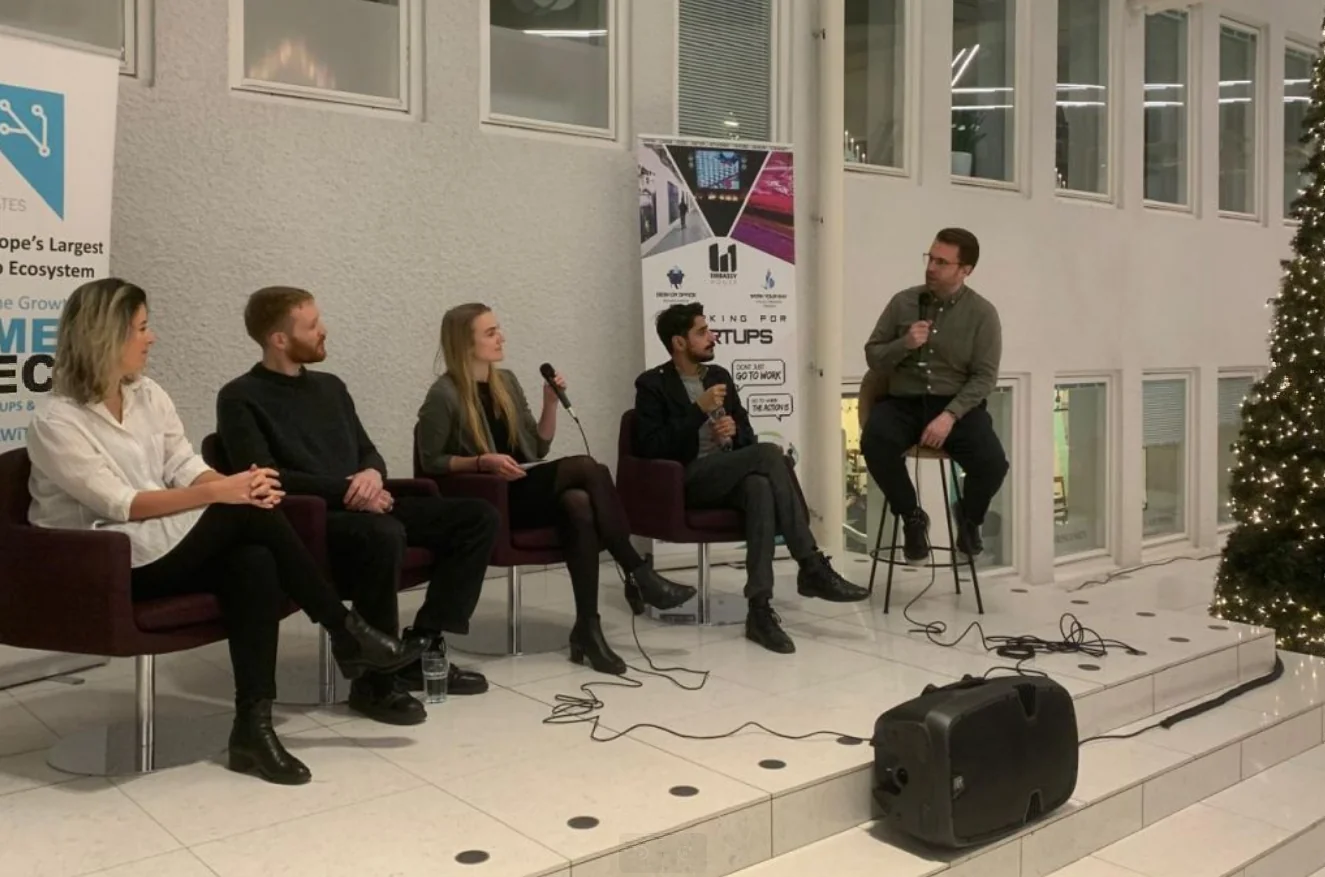
Monok founder Adam Sam joined technology entrepreneurs, marketing specialists, and legal experts at Stockholm Startup Sessions to discuss how artificial intelligence is transforming digital marketing, consumer trust, and commercial opportunities across Europe and the United States.
Organized by Tech Nordic Advocates in partnership with Embassy House, the inaugural event brought together members of Stockholm's technology community for a discussion titled "Ethics in AI: Redefining the Future of Marketing – Exploring Ethical AI Innovation for Market Opportunities in Europe and the U.S."
The conversation comes at a time when businesses are rapidly adopting generative AI, while questions surrounding transparency, accountability, and regulation are becoming increasingly important.
AI adoption in marketing is accelerating
The commercial adoption of artificial intelligence has accelerated considerably in recent years, particularly in marketing and sales.
According to McKinsey's May 2024 State of AI report, 65% of surveyed respondents said their organizations were regularly using generative AI, nearly twice the proportion recorded in the previous survey just ten months earlier.
Marketing and sales were among the business functions reporting the most frequent adoption, with usage more than doubling compared with the previous year.
The findings suggest that generative AI is moving beyond experimentation and becoming part of everyday business operations.
For marketing teams, the applications extend from automated content production and campaign development to customer segmentation, personalized communication, and data analysis.
However, greater adoption also introduces new responsibilities, particularly when AI-generated content and automated decisions influence what consumers see and how they interact with businesses.
Consumer trust remains a major challenge
While businesses increasingly recognize the commercial potential of AI, consumer confidence has not necessarily developed at the same pace.
Research published by Salesforce in August 2023, based on responses from more than 14,000 consumers and business buyers across 25 countries, highlighted a significant gap between enthusiasm for AI innovation and confidence in its ethical deployment.
The findings revealed that:
- 89% of customers considered it important to know whether they were communicating with AI or a human.
- 80% believed human validation of AI-generated outputs was important.
- 68% said advancements in AI made it more important for companies to be trustworthy.
- 63% expressed concerns about bias in AI systems.
These findings highlight an important challenge for businesses adopting AI-powered marketing technologies: improving efficiency does not automatically translate into greater consumer confidence.
Transparency, human oversight, and responsible data handling increasingly influence how customers evaluate AI-powered services.
For companies developing marketing automation platforms, these considerations are relevant not only to regulatory compliance but also to the long-term sustainability of customer relationships.
Europe and the United States are taking different approaches
One of the central themes of the Stockholm discussion was the difference between European and American approaches to regulating artificial intelligence.
The European Union has pursued a comprehensive regulatory framework, building upon existing data protection legislation such as the General Data Protection Regulation (GDPR).
On August 1, 2024, the EU Artificial Intelligence Act entered into force, introducing a risk-based regulatory approach to AI development and deployment.
The legislation establishes different requirements depending on the potential risks associated with specific AI applications, with obligations scheduled to become applicable in stages.
The United States has generally followed a more decentralized approach, combining sector-specific rules, federal guidance, state-level legislation, and voluntary industry commitments.
These differences have significant implications for technology companies seeking to expand internationally.
For businesses operating in both markets, developing trustworthy AI systems requires understanding not only technological capabilities but also different legal expectations and consumer attitudes.
AI investment highlights the scale of the opportunity
The growing commercial importance of artificial intelligence is also reflected in investment activity.
Stanford University's 2024 AI Index Report found that global private investment in generative AI reached approximately $25.2 billion in 2023, almost eight times the amount invested in 2022.
The report also documented substantial differences in the geographical distribution of AI investment.
In 2023, the United States accounted for approximately $22.5 billion in private generative AI investment, compared with approximately $0.7 billion across the European Union and United Kingdom combined.
While private investment is only one measure of technological development, the disparity illustrates the different commercial environments in which AI companies operate.
For European startups, accessing international markets while navigating different regulatory systems presents both a challenge and an opportunity.
The Stockholm Startup Sessions discussion explored this intersection between innovation, regulation, and international market expansion.
Bringing together technology, legal, and marketing expertise
The expert panel featured participants representing different perspectives on artificial intelligence and its commercial applications:
- Adam Sam, Founder of Monok
- Maria Selting, Founder of Phuturist
- Karola Xenia Kassai, Founder of KassaiLaw
- David Richardson, AI Business Developer at Codon Consulting
- Jesper Petersson, Founder of Lemming Digital
The discussion explored the relationship between technological innovation, legal responsibilities, consumer protection, and new business opportunities.
The mix of expertise reflected the increasingly interdisciplinary nature of AI adoption, where software engineering, business strategy, law, and marketing frequently intersect.
Monok's perspective on AI-driven publishing and marketing
For Monok, the discussion addressed questions closely connected to the company's work in automated content production and digital publishing.
Monok develops technologies that combine artificial intelligence with automated publishing workflows, enabling businesses and publishers to produce and distribute content at scale.
As AI-generated content becomes more common across digital channels, questions about quality, reliability, transparency, and editorial responsibility become increasingly relevant.
The rapid expansion of generative AI has made it possible to automate activities that previously required substantial manual effort. But the commercial value of these systems depends on more than their ability to produce large volumes of output.
Businesses must also consider the quality of information, the reliability of automated processes, and the expectations of the audiences they serve.
These challenges are particularly relevant to digital publishing, where credibility and audience trust remain fundamental to long-term success.
Strengthening connections across the Nordic technology ecosystem
Beyond the panel discussion, Stockholm Startup Sessions provided an opportunity for entrepreneurs and technology professionals to exchange ideas and establish connections.
Tech Nordic Advocates also presented initiatives supporting international expansion, including its upcoming U.S. Market Access Program, introduced by Program Manager Barry O'Brien.
The event was hosted in partnership with Embassy House, with support from Anders Nilsson, Per Wahlfridsson, and Tech Nordic Advocates ambassador Per Strömbäck.
Monok thanks the organizers, fellow panelists, and participants for an engaging discussion.
As artificial intelligence becomes increasingly integrated into marketing and publishing, exchanges between technology developers, legal experts, businesses, and policymakers will play an important role in shaping how these systems are adopted.
The challenge ahead is not simply making AI more capable, but ensuring that its growing capabilities translate into useful, reliable, and trustworthy applications.