
Monok wins the SiGMA/AGS Startup Pitch in Dubai
SiGMA covers Monok’s startup pitch win in Dubai and interviews founder Adam Sam about combining AI with editorial expertise.
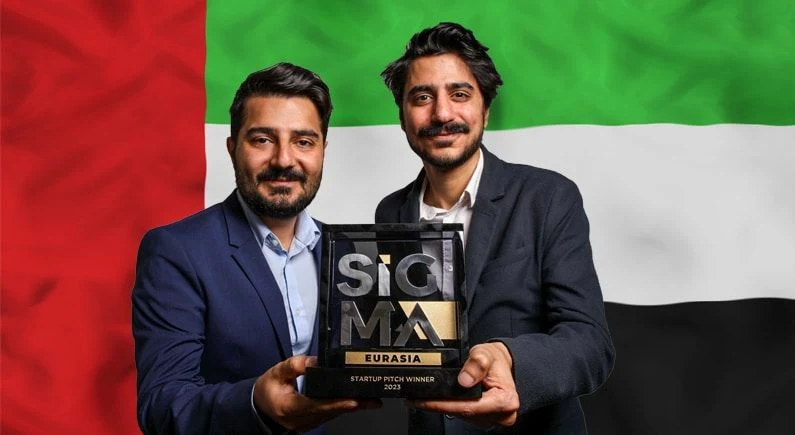
Monok has won the SiGMA/AGS Startup Pitch at the Eurasia Summit in Dubai. SiGMA announced the result on March 16, 2023, and followed the award with an interview with our founder Adam Sam about the technology, the business and the work behind it.
For us, the recognition marks a milestone in a project that began well before AI writing became a mainstream conversation. Monok was founded in Stockholm in 2016 by brothers Adam and Sam Sam, building on research into natural language processing, machine learning and human-computer interaction.
What we brought to the pitch
SiGMA’s coverage describes our combination of automated news production and human editorial expertise. In the interview, Adam explains how a customer’s topics become the starting point for finding information, grouping related stories and preparing article drafts. Editors then review the material and address problems before publication.
He also discusses the motivation for automating routine production: giving writers more room for original reporting, investigation and creative work rather than spending their time assembling rewrites and summaries.
Building the system around the article
Our early work focused on a practical problem: producing a useful article involves much more than generating sentences. Information has to be found and organized. Related reports need to be brought together. Images must fit the subject, and the finished material has to reach the publication in a usable form.
That is why Monok’s development has centered on a connected publishing workflow. Information retrieval, document clustering and automated writing are parts of the same system, rather than separate demonstrations. A draft is an intermediate result; the goal is content that can move through an editorial process.
The distinction matters for smaller publishers and businesses as well as established media teams. A convincing example is not enough if using it creates another set of manual tasks. The engineering challenge is making the surrounding work dependable, repeatable and manageable for the people responsible for publication.
From research to customer needs
Our first paying customer, Marubeni through a US-based operation, approached us with a concrete requirement: Japanese-language news production. That relationship helped turn an ambitious research problem into a working commercial service. It also made the practical requirements clear, from relevant imagery and language handling to editorial control and reliable delivery.
The Dubai award is a welcome moment to recognize that journey. The continuing work is less ceremonial: improve the system, learn from customers and make sophisticated publishing tools easier to use.