
Techarenan profiles Monok and the brothers behind it
Techarenan explores our founders’ early software projects and the thinking behind Monok’s approach to AI-powered publishing.
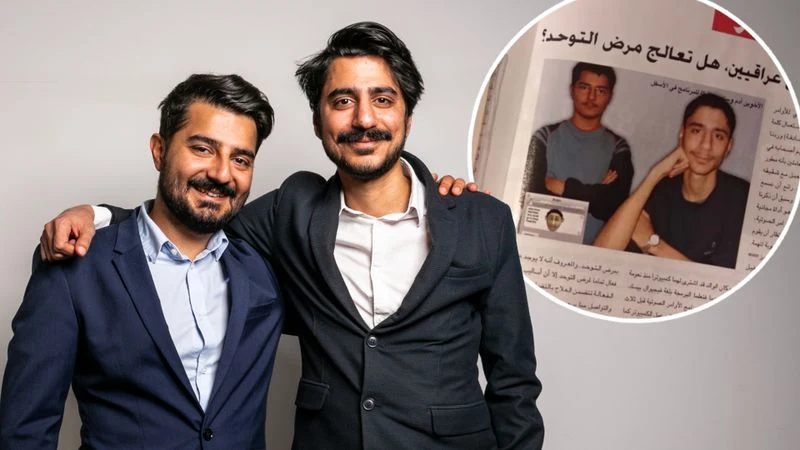
Techarenan has published a profile of Monok and our founders, brothers Adam and Sam Sam. Written by Johannes Lundberg and published on August 16, 2023, the feature follows a shared interest in programming from childhood experiments to the work of building a publishing business.
Software before the startup
Long before Monok, the brothers developed a voice-controlled application for Windows. Techarenan revisits that project and the attention it received outside Sweden. What started as something built at home reached people with practical uses the brothers had not necessarily anticipated.
That early experience is an important part of our company’s story. It established a pattern that carried into Monok: start with a difficult technical question, build something that works, and learn what it becomes when other people use it. Software gains a different meaning when it moves from a personal experiment into someone else’s daily routine.
The research behind Monok
Monok was founded in Stockholm in 2016, drawing on work in natural language processing, machine learning and human-computer interaction. The problem was not simply whether a computer could write a paragraph. It was whether software could help carry information through the many stages between finding a story and publishing an article.
Adam’s academic background includes computer science at KTH Royal Institute of Technology, studies at Stockholm University, and research and project work at KAIST in South Korea. He also spent two years conducting behavioral research at Harvard University’s Decision Science Laboratory, contributing to experimental design, research methodology, software development and participant studies.
That combination of engineering and research informs how we approach automation. A system needs to do more than produce an impressive result once. It has to be usable, its limitations need to be understood, and the people working with it need meaningful control.
A publishing problem, not just a writing problem
The early Monok systems brought together information retrieval, document clustering and automated writing. Finding sources, connecting related reports and preparing content for publication were treated as parts of one workflow.
Our first paying customer was Marubeni, through a US-based operation seeking Japanese-language news production. Working on a real publishing requirement made questions about delivery, imagery and localization concrete. Those details can matter as much to a customer as the text itself.
Building through skepticism
Lundberg’s profile also examines resistance to AI in the media industry and how that shaped the company’s beginnings. It captures the brothers’ complementary roles and their decision to keep developing the technology despite that resistance.
For us, the value of this coverage is the longer perspective. Monok did not begin with a single model or a sudden wave of attention. It grew from years of research, software development and learning from the demands of publishing.